
Aquaponic Farming: From Fingerling to Fish Fry, A Seven-Month Training Course in Aquaponic Farming
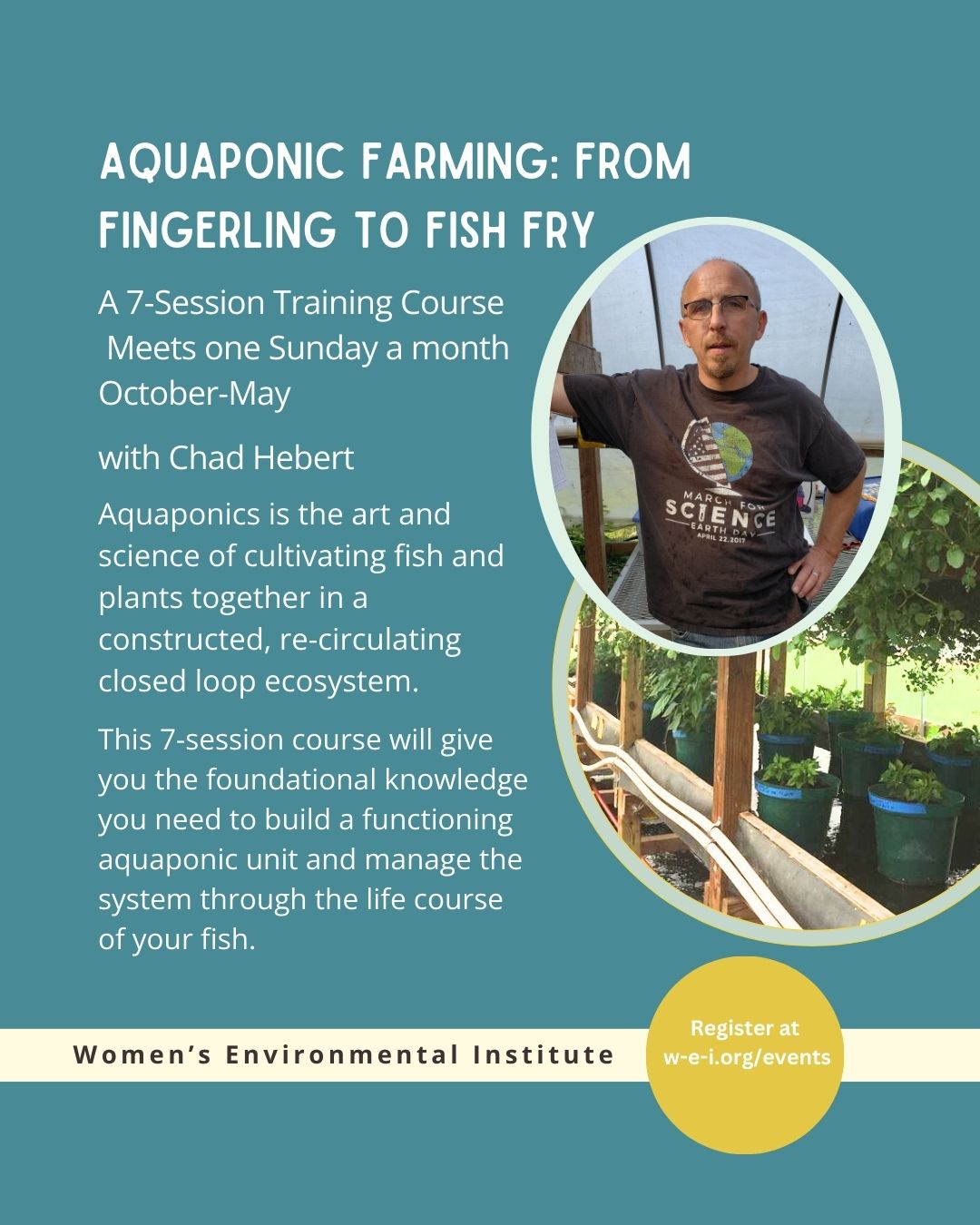
Are you interested in pursuing a career in aquaculture, or diversifying your farm with aquaponics? Growing fish and greens together provides both fresh organic greens and uncontaminated protein from fish. This 7-month course will give you the foundational knowledge you need to build a functioning aquaponic unit and manage the system through the life course of your fish. We will be using yellow perch in a hoophouse at Amador Hill Farm as our lab.
First Class: October 19, 1:30pm-4pm.
Time: Every third Sunday of the month 1:30-4:00p October 2026-May 2027
All Class Dates:
- October 18
- November 15
- December 20
- January 17
- February 21
- March 21
- April – tours of UMN aquaponics system; dates TBD
- May 16
Location: Classes meet at WEI’s Amador Hill Farm & Orchard just outside North Branch unless otherwise noted.
What is Aquaponics? Aquaponics is the art and science of cultivating fish and plants together in a constructed, re-circulating closed-loop ecosystem, utilizing natural bacterial cycles to convert fish wastes to plant nutrients. WEI’s aquaponic training program is a seven-month lecture and hands-on experience course. The class will begin with basics in aquaponics and aquaculture. Each month we will explore a new topic of study as it relates to aquaponics. The topics will range from aquaponic water chemistry and fish ecology, design and equipment for aquaponic tubs, fish and plant health, planting techniques for growing aquaponic vegetables, system maintenance and equilibrium, equipment resources, lighting/energy efficiency, spawning and fish ribbons, harvesting and market planning, and state regulations for aquaponic farming in Minnesota. This 7-month Training Course will provide you with basic knowledge and skills for building and managing a living aquaponic system.
Readings, homework and take-home exam. You can go as deep as you want in this class in pursuit of your learning experience. The assigned readings will give you background information for the class. You can complete these readings or save for a later day. Chad’s teaching technique is packed with knowledge, years of experience and a wide understanding of aquaculture and climate activism. If you read the assigned articles, you will have a good chance to ask Chad informative questions. We are hoping that each of you may develop a small mini-aquaculture home system or start designing a larger one. The course requires volunteering at least one day at WEI’s winter farm to help take care of the aquaponic system. Students will be given the opportunity to complete a take-home exam to review and write about what they have learned. An optional individual mentorship meeting with Chad will cap this extra effort. Upon successful completion of the class, Chad and Jacquelyn (WEI Director) would be happy to write a letter of support for your future steps into aquaculture.
 Instructor bio: Chad Hebert owned and operated the Urban Farm Project for more than 10 years. The Urban Farm Project successfully raised more than 30,000 pounds of yellow perch and almost 50,000 pounds of vegetables. For the past nine years, Chad has participated in a cooperative research agreement with the University of Wisconsin-Milwaukee School of Freshwater Science. Chad has completed his HACCP training for both AIS and seafood processing. The Urban Farm Project was involved in a number of aquaponic projects including the project at WEI. Chad is currently working with EPNI to coordinate and implement a larger scale operation. Chad Hebert started the Urban Farm Project with the belief that there was a need to build sustainable food systems that could be available to all people while protecting the planet we live on.
We have one textbook for the class, Sylvia Berstein’s Aquaponic Gardening, which will be issued to students at the beginning of the class.